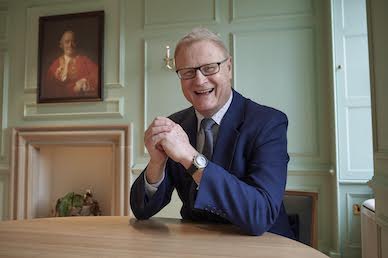
The CEO of the Scottish National Investment Bank (SNIB) said on Monday it is “focused on strengthening the Bank’s long-term capability” as it recorded a net loss of £138 million in its latest annual report and accounts, covering the year to March 31, 2026.
The state-owned Scottish development bank committed £374 million for the year in Scottish businesses and projects, the most since it was established in November 2020. To date, it has committed over £1.2 billion to 53 businesses and projects.
“Despite economic headwinds, many of the Bank’s portfolio companies are performing well and it anticipates successful exits in the future,” said the bank.
Last month, the Bank published its updated investment strategy – the first to be overseen by new CEO David Ritchie – which strengthens the Bank’s commercial terms.
SNIB said the net loss of £138 million was “driven by realised losses (£65m) relating to the failure of three investments made in the early years of the Bank, and unrealised losses (£85m) due to re-evaluations of long-term assets, as well as anticipated losses relating to the failure of two further portfolio companies whose administration processes hadn’t completed by 31 March.”
“Losses connected to the failures of Krucial, M Squared and Trojan had crystallised by end of financial year and are therefore recorded as realised losses,” said SNIB.
“The administration processes for Orbex and Pneumowave will complete in the next financial year, so losses are recorded as unrealised.”
Alongside its own capital, the investment bank crowded in £445 million of outside investment, up 37% from the previous year, making a total of £1.9 billion since launch.
Income of £32 million was ahead of forecast while costs of £20 million were below budget.
SNIB said its investments have positively impacted over 325,000 people since launch in 28 out of 32 local authorities across Scotland, while supporting 3,300 jobs through its portfolio.
The bank said that excluding losses, it generated an operating profit of £12 million. It said its income has consistently exceeded its operational costs since FY23/24.
SNIB chair Willie Watt said: “Investment losses will always be present in a development bank portfolio, with a mandate to take on higher risk.
“However, the scale of the realised losses taken together with the provisions made against the portfolio is challenging.
“Many of these losses relate to the first three years of the Bank’s existence and predate tighter investment conditions that were introduced in 2023.
“Our learning and adapting is reflected in our current portfolio and investment practice, as well as our careful study of market trends.
“Businesses are facing a challenging funding and operating landscape, demonstrating that Scotland needs investors, like the Bank, with a long-term view, and this is reflected in the strength of our pipeline.”
SNIB CEO David Ritchie said: “We have been learning lessons from previous investments while re-calibrating our processes to capitalise on the opportunities in the current Scottish market.
“We will continue to invest on market-based terms while crowding in private finance. We have ambitious plans, aligned to our clear purpose of accelerating a sustainable, innovative and inclusive Scottish economy.
“We concluded several significant investments last year, alongside notable institutional investors. Our £50m investment in Octopus Capital’s Affordable Housing Fund introduced a new model of affordable housing to Scotland.
“We are also looking at how we can support energy security and grid stabilisation, as reflected by our £45m investment in Highview’s long-duration energy storage (LDES) facility at Hunterston.
“And we continue to support promising innovation with demonstratable income generation, like our £3m investment in healthtech business Bioliberty, which led the firm’s Series A round.
“Looking ahead, we are focused on strengthening the Bank’s long-term capability.
“That includes improving our ability to retain and recycle capital to sustain investment over time, entering the market to raise and manage third party capital and continuing to invest in Scottish projects and businesses that drive long-term economic value and societal benefit.”
.