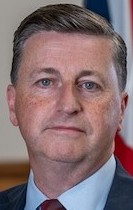
The chair of the £1.1 billion Baillie Gifford US Growth Trust plc has written to the UK government’s Secretary of State for Scotland Douglas Alexander and Economic Secretary to the Treasury Lucy Rigby urging them to help protect the UK investment trust industry from attacks by hedge funds.
In his letter, Baillie Gifford US Growth Trust chair Tom Burnet told the politicians that New York hedge fund Saba Capital will attempt, for the third time, to replace the investment trust’s existing board at the fund’s AGM on October 23.
” … investment trusts such as Baillie Gifford US Growth Trust are now being targeted in ways the existing rules were not designed to handle,” wrote Burnet.
UK investment trust companies manage assets of around £270 billion and a substantial number of the trusts are managed by Scotland-based asset managers like Baillie Gifford and Aberdeen.
Burnet said Saba Capital has built a stake of just under 30% in Baillie Gifford US Growth Trust – a fraction below the level at which it would be obliged to make a takeover offer.
“This time, Saba has put forward three nominees,” said Burnet. “None of these individuals is independent. One is a Saba employee. Another has been nominated as a director of other listed investment companies by Saba on multiple occasions over the past 10 years …
“In recent weeks, a second New York-based hedge fund, Sessa Capital, has built a stake of 7.7% in the company; it has not disclosed how it intends to vote but, as they have refused to engage with us, we must assume they will be supporting Saba, as they have done in other circumstances.
“Earlier this year, at Edinburgh Worldwide Investment Trust, a board backed by the great majority of shareholders was replaced by Saba after three other US hedge funds joined the register ahead of the vote. With almost 30% of the company’s shares, Saba is likely to prevail at our AGM unless more than 38% of all other shares in issue are voted against it.”
In his letter, Burnet added: “Thank you, Secretary of State, for speaking to my fellow director Chris van der Kuyl on 30 September, and for the attention you and your colleagues are paying to this matter.
“I am writing on behalf of the board of Baillie Gifford US Growth Trust to set out our concerns at the threat presently facing our company – and the broader UK investment trust industry – and to ask that they reach the relevant ministers and regulators.
“Investment trusts are one of Britain’s great contributions to finance, and they have contributed greatly to the prosperity of ordinary savers. Since the first was launched in London in 1868, they have allowed people to pool their money and own assets that would otherwise be out of reach.
“Baillie Gifford US Growth Trust is a fine modern example. Since its IPO in 2018, it has given UK investors – many of them individuals saving through ISAs, pensions and platforms – access to exceptional American growth companies, both public and private, for a low ongoing charge of 0.7% and no performance fee.
“Holdings include pioneering companies such as Anthropic, Databricks, OpenAI, SpaceX and Stripe, and at the end of May 2026 it was the only UK-listed investment trust to hold all five of America’s biggest private companies directly.
“Its annualised net asset value total return of 16.7% since launch places it in the top 10% of all UK-listed investment companies as at 31 August 2026. This is exactly the kind of opportunity the Government would like more people to share in.
“Yet investment trusts such as Baillie Gifford US Growth Trust are now being targeted in ways the existing rules were not designed to handle …
“Our other shareholders have rejected Saba’s past proposals emphatically. Excluding Saba’s votes, 98.5% of votes cast at our February 2025 general meeting opposed Saba’s resolutions, and 99.2% supported the Board at last year’s AGM.
“The board has repeatedly offered Saba – and any other shareholder who wishes to leave – a cash exit at close to net asset value. Saba has rejected every one of these proposals, and is now making yet another attempt to install its own nominees.
“The board believes that the appointment of Saba’s nominees would signal the end of the company’s strategy, heralding its transition into a vehicle for Saba’s own benefit.
“Our difficulty is one of arithmetic. Resolutions are decided by a simple majority of the votes cast, and turnout among private investors – who hold just over half of our shares – can be variable, particularly when they hold their shares through investment platforms.
“Like us, shareholders have endured almost two years of Saba’s obstructiveness …
“Platform deadlines for our AGM fall as early as 14 October – more than a week before the meeting. Some wealth managers do not routinely tell their execution-only clients that a vote is taking place at all. A determined minority shareholder can take control of a company that the majority of its other shareholders want to keep …
“This is an issue that goes well beyond Baillie Gifford US Growth Trust and threatens the integrity of the broader UK investment trust sector and UK public equity markets …
“We recognise that nothing ministers or regulators can do now will change the rules that applyto our AGM; our shareholders will decide the company’s future, and we are urging every one to vote. But we believe these issues merit attention at the highest level …
“In connection with their latest requisition, neither Saba, nor its nominees, have provided any relevant biographical information to the board about the proposed nominees to share with our shareholders to allow them to assess their suitability as directors of the company.
“Saba has publicly stated that, if elected, it would urge its nominees to offer shareholders a 100% cash exit at or near net asset value without explaining how that can be achieved. The company has insufficient legal reserves to fund a 100% cash exit and Saba has not provided any further details as to who would pay the costs to provide an exit at net asset value.
“Saba has also claimed publicly to have generated more than £600m for shareholders in the trusts it has targeted.
“Whatever the merits of that claim, neither it nor its proposal for a cash exit for shareholders has been subject to the scrutiny a board’s own statements must undergo.
“We would ask the Government to consider whether shareholders seeking to requisition meetings or replace a board, or otherwise influence or persuade shareholders to vote in a particular manner or to take or oppose any particular action, should be held to the same standards as the company’s directors.
“Investors deciding how to vote should be able to rely on the information and representations put forward by both sides. This is an issue that applies across UK-listed companies, not only investment trusts.
“The Government’s ambitions for London’s capital markets – including encouraging more growth-orientated companies to list here and democratising access to investing – depend on confidence that ordinary savers’ interests will not be overridden by minority shareholders willing to abuse voting dynamics.
“Without swift action, more investment trusts will fall prey to such tactics, and the ordinary savers who rely on them will be the ones who suffer. We would welcome the opportunity to take up these matters with you and your colleagues in Government.”